
Why is there a need to take up a full diploma programme to become a kindergar ten teacher? It is a question many people have asked, including entrepreneur and early childhood educator Grace Tiong Mann Yin.
It was not the love for children that prompted her to take up the Diploma in Early Childhood Education (ECE) in 2011 but the study and understanding of children’s behaviour and growth.
That’s what ECE is all about at Methodist Pilley Institute (MPI). Something that Grace did not expect she would learn when taking up the programme.
“We studied a lot about child development, and I never thought that we would go so in-depth about studying children and their learning process. I thought we would only learn about strategies, content needed to teach children and how to manage classes,” she said.
Prior to enrolment, Grace already had her Diploma in International Business and was also pursuing her degree in business. However, she quit after the first semester of the degree programme. She said paperwork bored her. She needed something that was lively and was looking into child psychology.
However, her mother was not convinced of her choice. Not wanting to crush her spirit, her mother suggested that she take up ECE at MPI – a programme that was not very popular at the time but might promise a brighter future.
Since ECE is related to children, she decided to enrol in the programme.
The Diploma in ECE gave her the foundational knowledge of early childhood education and kindergarten. She also learned how children behave physically, cognitively, socially, emotionally and how their language develops.
This foundational knowledge helps early childhood educators come up with suitable lesson programmes and structures that children could follow while keeping them engaged during lessons.
Grace’s classes were mostly in the afternoon and evening. In the morning, she chose to work in a kindergarten, an effort to enhance her learning – putting the theories to the test.
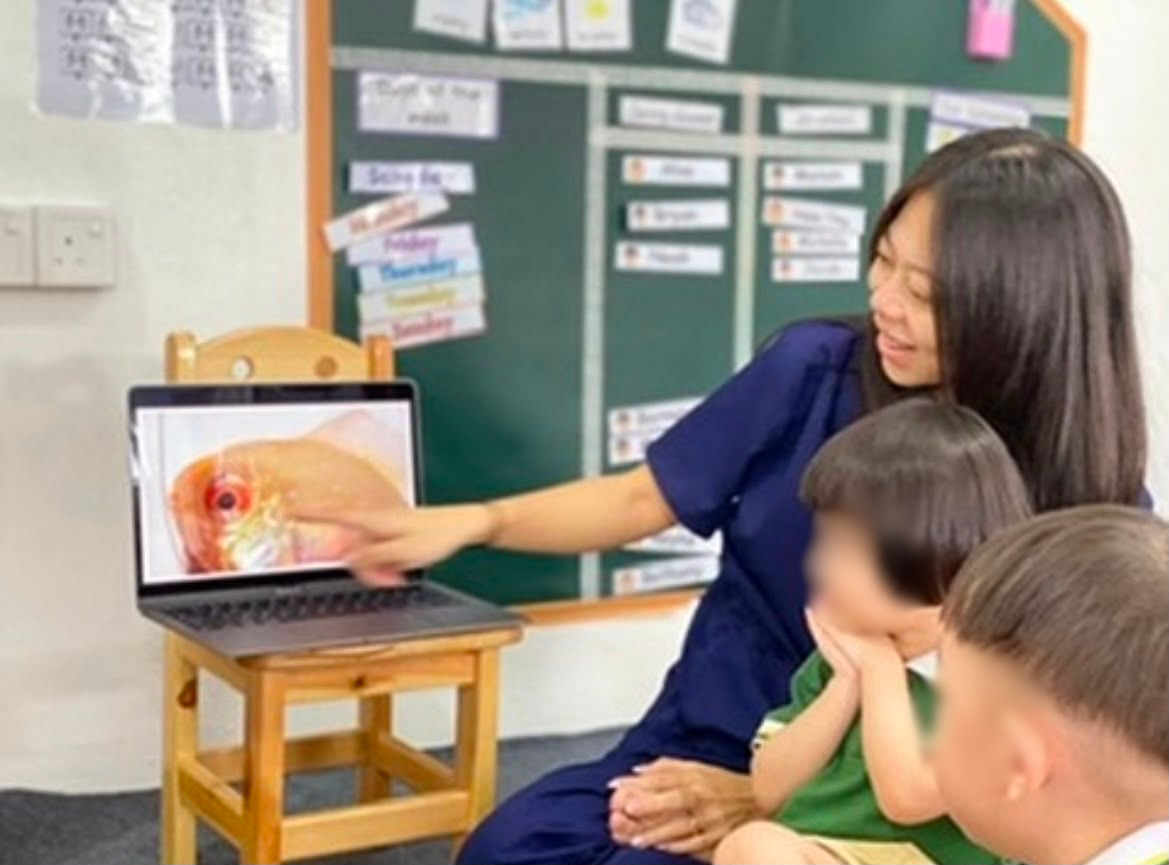
“We learned theories and strategies in managing children. While I was working in the morning, I could experiment with them and see whether the theories taught in class actually worked in a real classroom,” she said.
Her finding: there is no one model that fits all. Foundation is important, but early childhood educators must be observant and creative enough to come up with effective lesson plans for children.
During her time, the programme was examination-based. Students received grades through assignments, projects and examinations.
Today, MPI has further enhanced the programme by replacing traditional examinations with continuous assessments, assignments and field experience to better prepare graduates for the workplace.
Grace completed the Diploma in two years and, because ECE was a niche market at the time, MPI was looking for more teaching staff. MPI then recruited her as a full-time lecturer in ECE.
She gave herself only three years of commitment in this opportunity before finding her own path. Three years went by and, just like that, she taught at MPI for 10 years as a full-time lecturer.
However, those 10 years prepared her for the next career path – starting her own kindergarten. Working with another partner, she started the business in 2023. She named it HeartsHome Kindergarten. Due to the demands of her business, she had to let go of her full-time position and teach part-time.
“Starting a business is everybody’s dream. My friends and I had been discussing this for more than two years. We met a friend from Peninsular Malaysia, and she inspired us to have different views on what we should do for our kindergarten,” she said.
Now, she not only teaches from an educator’s point of view but also as a business owner and kindergarten operator, sharing valuable insights with her students. These insights include the curriculum she designed, the challenges she faced and the strategies she implemented to resolve those challenges.
According to her, one of the biggest challenges was the acceptance of her designed lessons for children. She said most parents questioned her and assumed that her programmes lack sufficient academic content. Most kindergartens might already start with writing the alphabet and numbers at the age of three and four.
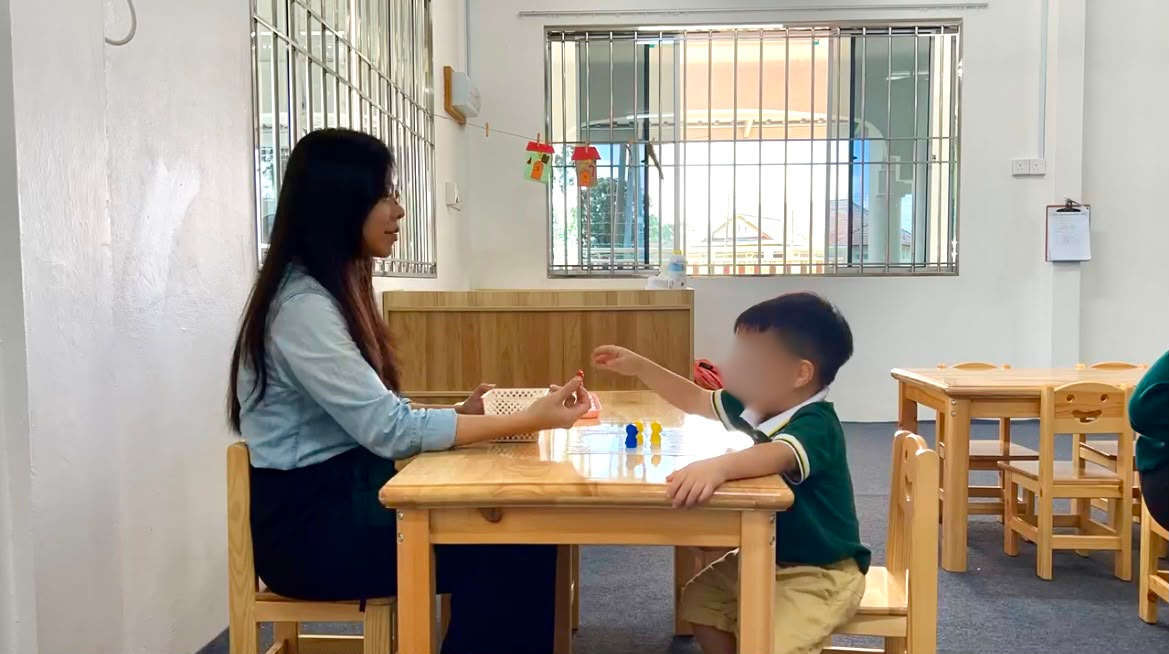
In HeartsHome Kindergarten, children aged three and four have minimal chances to hold pencils to write. Instead, they learn to strengthen their fine motor skills to build foundations for writing in later years. Children will start writing at the age of five.
“We face a big challenge in this because the community does not always see the value and agree with this approach. For our trained teachers, they also face a big gap in applying what they learned,” she said.
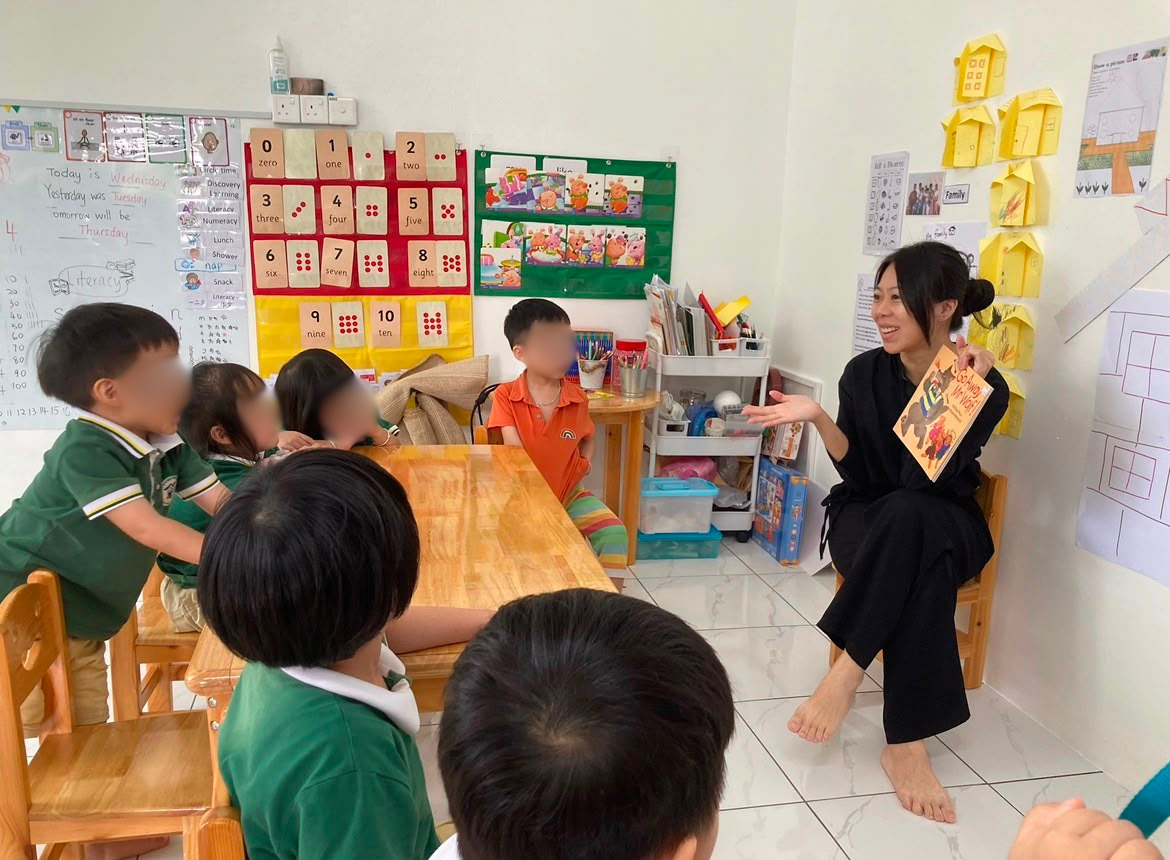
She further explained that children are still being taught the concepts of numbers, letters and the sounds of letters at an early stage.
“When they come to the ages of five and six, they are ready and equipped with the words that they learned and we practise more academic writing skills, where children understand the meaning of the instructions, and the pragmatic/contextual meaning. So, the learning is more meaningful to them rather than memorisation,” she said.
This child development is also covered in the Diploma in ECE syllabus, where students are required to plan developmentally appropriate learning lessons and activities for children.
To resolve this, Grace said she would explain it to parents during the visitation before they enrolled their children in her kindergarten.
Parents’ reaction to her approach is understandable. They need to ensure that the foundation from the kindergarten would enable the children to cope with learning in primary school. Thus, as an educator, Grace always strives to strike a balance between the needs of both parents and children.
Again, as a kindergarten owner, she also needs to ensure an environment that allows not just children but her teachers to grow as well.
She said by bringing these real-case situations to class, it will make the lessons more relatable rather than just theories.
According to Grace, for now, she had to put her teaching career at MPI on hold due to the demand of her business. Grace has six teachers in her kindergarten, with all of them holding at least a diploma. Some of them are currently in a degree programme and might have other plans after graduating.
Grace said currently her kindergarten is lacking in manpower. She said once she has a stronger team, she would continue with her part-time teaching at MPI. This itself shows a great demand for early childhood educators in the community.
So, is the Diploma in ECE challenging? It can be. In terms of coursework, students need to invest a lot of time to find ideas and information.
ECE students are challenged to be different, to try new ideas, to think critically and to be innovative in their studies. She said students must face these challenges so that they can apply all the lessons they learned when they go out into the working world.
Because early childhood education is important to children’s growth, the Malaysian government mandated that all preschool and kindergarten teachers must possess at least a Diploma in ECE starting in 2020. To meet the demand of the industry, MPI is among the pioneers in training early childhood educators to be more competent in their jobs, thus contributing to children’s growth.